
Salvation Army teams are providing relief and support in communities affected by Venezuela's deadly earthquakes
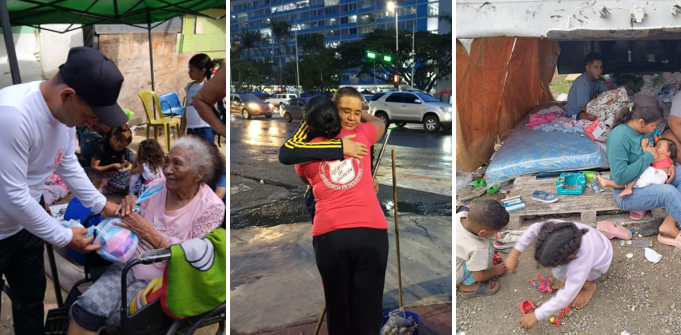
Local Salvation Army teams from across Venezuela are now on the ground in Caracas and are delivering help and supplies to relieve in communities affected by two powerful earthquakes that struck on 24 June.
UPDATE: august 6, 2026
Recovery Needs Grow as The Salvation Army Expands Support
More than five weeks after the devastating earthquakes that struck Venezuela on June 24, The Salvation Army and its partners continue to provide practical support, emotional care and recovery assistance to communities facing an uncertain future.
The humanitarian crisis remains severe. According to the latest official figures, 5,546 people have died, more than 16,700 have been injured, and nearly 24,000 people are still living in temporary camps. Authorities report that 856 buildings were damaged, including 190 that collapsed completely. Since the initial earthquakes, approximately 1,500 aftershocks have been recorded, compounding the challenges facing affected communities.
While emergency needs remain significant, conversations with residents increasingly point to longer-term concerns. Many families continue to live in temporary accommodations while facing uncertainty about housing, income and the recovery process.
Salvation Army Response Continues
Operating in partnership with Emmanuel Church and local volunteers, The Salvation Army remains actively engaged in relief efforts across affected communities.
The Salvation Army response has reached 7,134 people with food, water, hygiene supplies, bedding, clothing, emotional care and spiritual support.
Relief efforts have included:
- 3,116 meals provided to people affected by the earthquake
- 1,006 food parcels distributed to families and communities in need
- 1,387 hygiene, cleaning and essential care kits provided to families
- 305 distributions of basic medicines and health supplies provided
- Mattresses, pillows, bedsheets and clothing distributed to support displaced families
The Salvation Army has also continued to support those working tirelessly in response and recovery operations. Small care packages containing drinks, energy bars, hand sanitizer and wipes have been distributed to rescue workers, and 23 safety helmets have been supplied for those involved in rubble removal efforts.
Caring for More Than Physical Needs
Alongside practical support, emotional and spiritual care remains a key part of The Salvation Army's ministry.
Response teams have held more than 400 individual conversations with people affected by the disaster, offering encouragement, prayer and support where appropriate. Children's activities and psychosocial support events have also provided moments of normalcy and joy for young people living in shelters, with hundreds of children participating in programs organized during the response.
Looking Ahead
As recovery needs grow, The Salvation Army is planning for the next phase of assistance. Current efforts include developing longer-term recovery projects, strengthening logistics and transportation capacity, and preparing for continued support in the months ahead.
After weeks of intensive field work, team members recently took a brief weekend respite before returning to ongoing response operations. Despite challenging living conditions and long days in the field, preparations continue to ensure assistance can be sustained and expanded as needs evolve.
The Salvation Army remains committed to standing alongside the people of Venezuela for as long as needed, providing practical support, compassionate care and hope to communities rebuilding after disaster.
UPDATE: July 17, 2026
Salvation Army expands support for earthquake survivors and frontline rescue workers in Venezuela
More than three weeks after devastating earthquakes struck Venezuela, Salvation Army teams and local partners continue to adapt their response to meet evolving needs in affected communities.
As search and recovery efforts continue across parts of Caracas and La Guaira, thousands of families remain displaced or are waiting for news about missing loved ones. Salvation Army personnel, volunteers, and church partners are providing practical assistance alongside emotional and spiritual care for survivors, family members, and first responders working in difficult conditions.
One of the Salvation Army’s most important partnerships has been with local churches that are preparing meals for communities affected by the disaster. Because many families remain without access to kitchens or cooking facilities, churches are cooking and distributing between 300 and 500 meals each day using ingredients supplied through the response effort.
Salvation Army teams are also supporting rescue workers engaged in ongoing search operations. Assistance has included food parcels, energy snacks, refreshments, bedding items, hygiene supplies, and protective equipment such as safety helmets for volunteer responders working in hazardous conditions.
Across affected neighborhoods, Salvation Army personnel and volunteers continue to offer emotional and spiritual care to people coping with trauma, grief, and uncertainty. Team members regularly spend time listening to survivors and family members, offering encouragement, prayer when requested, and compassionate support during an extraordinarily difficult period.
Response activities continue in partnership with churches, community organizations, and humanitarian partners. While logistics and coordination remain challenging, these local relationships are helping ensure assistance reaches communities with urgent unmet needs.
As of July 15, Salvation Army-supported activities had provided:
- 1,905 meals
- 843 food parcels
- 627 hygiene kits
- 396 emotional and spiritual care conversations
- Assistance to 5,139 individuals
In addition to support provided through local church networks, assistance is being strengthened through partnerships with UPS, Greater Good Charities, Airlink, Convoy of Hope, and other humanitarian partners, helping expand food assistance, critical relief supplies, logistics support, and emergency aid for earthquake-affected families and first responders.
The Salvation Army remains committed to serving communities affected by the disaster and adapting assistance as needs continue to evolve.
How You Can Help
Please continue praying for families who have lost loved ones, those still awaiting news of missing relatives, and the rescue workers, volunteers, churches, and humanitarian teams serving affected communities.
Financial contributions help provide food assistance, hygiene supplies, emotional and spiritual care, and other critical support for families impacted by the earthquakes.
UPDATE: July 6, 2026
Salvation Army Teams Expand Frontline Relief as Venezuela Earthquake Response Enters Critical Next Phase
Salvation Army teams in Venezuela are continuing to expand relief efforts for families, rescue workers and communities affected by the deadly earthquakes that struck on June 24.
Working from a coordination base in Caracas, teams are purchasing, sorting, packing and distributing essential supplies while conducting ongoing assessments to identify where needs are greatest. The response is being delivered in partnership with Emanuel Church, Centro Islámico de Venezuela and Fundación a Todas Las Cosas en Común.
Across affected communities, Salvation Army personnel and volunteers are helping meet immediate needs while supporting the people leading search and rescue efforts.
Teams have provided meals, drinks and refreshments to civil protection personnel and rescue workers working long hours in difficult conditions. They have also supplied practical equipment, including helmets, head torches and gloves, for those helping clear rubble and search damaged buildings.
One Salvation Army volunteer currently serving on the front lines has been working alongside rescue crews, helping remove debris while providing refreshments and encouragement to first responders.
In Kilometro 24, a community in El Junquito, teams visited families living in temporary shelters and distributed flour, sugar, rice, canned tuna and other essential supplies. Relief workers have also unloaded and sorted donated goods, reassessed communities surrounding the church hosting the response team, and continued coordinating efforts with partner organizations operating in the area.
"In an emergency of this magnitude, needs evolve rapidly, and with many organizations responding simultaneously, effective coordination becomes both essential and challenging. Our priority is to avoid duplication of efforts while ensuring that assistance reaches communities that might otherwise be overlooked," said Ricardo Gomez, Emergency and Development Coordinator for The Salvation Army's Latin America North Territory, who is currently serving on the ground in Caracas.
Reaching Communities with the Greatest Needs
More than 2,295 people have been killed and over 11,000 injured following the earthquakes. Many families remain displaced, separated from loved ones, or living in temporary accommodation as aftershocks continue.
Widespread building collapses have left communities like La Guaira facing enormous humanitarian needs.
"La Guaira remains the area with the greatest concentration of humanitarian needs. While support is reaching the area, the scale of the destruction is so significant that existing assistance is still insufficient," said Gomez.
Communities in central Caracas are also facing significant shortages of food, safe drinking water and hygiene supplies. Salvation Army teams continue to map needs and identify communities that may not yet be receiving adequate assistance.
Access remains a challenge. Government restrictions continue around the most heavily affected areas where search-and-rescue operations are underway. Through its partnership with Emanuel Church, which has authorization to operate in restricted zones, The Salvation Army has been able to support ongoing relief efforts while pursuing additional access for its own personnel and resources.
Movement across Caracas has also been complicated by road closures, transportation shortages and ongoing seismic activity. Following a 4.1 magnitude tremor on July 1, teams continue operating under heightened alert while monitoring aftershocks that could further affect communities and infrastructure.
Recovery Will Take Time
Alongside physical assistance, Salvation Army teams are providing emotional and spiritual support to people coping with grief, uncertainty and displacement.
While emergency relief remains the immediate focus, response leaders are also looking ahead to the long-term recovery families will face. Many families remain outdoors or in temporary shelters because their homes are unsafe.
"For most affected families, the road to recovery remains long, and our assessments continue to evolve as we learn more each day," said Gomez.
The Salvation Army continues to coordinate with local and international partners, participate in humanitarian planning groups, and assess how it can best support recovery efforts in the months ahead. Early discussions include transitional shelter solutions, vocational training opportunities and support for larger temporary shelters expected to expand as recovery efforts continue.
"Our officers, volunteers and Salvation Army members have been actively deployed in the areas affected by the recent building collapses. Today, more than ever, we reaffirm our commitment to serve without discrimination and to be a beacon of hope in the midst of recovery," said Captain Edicson Sánchez, Regional Coordinator for Venezuela.
How You Can Help
The humanitarian needs remain significant and continue to evolve as assessments reach more communities.
Donations will help The Salvation Army:
- Provide food and essential supplies to affected families
- Support displaced people living in temporary shelters
- Deliver emotional and spiritual care to those coping with loss and uncertainty
- Equip frontline responders and volunteers serving in affected communities
- Reach underserved areas where needs remain high
As the situation develops, your support will help The Salvation Army continue providing practical assistance and compassionate care to those most affected.
Donate today to help provide families with much-needed relief.
Prayer Requests
Please join The Salvation Army in praying:
- For those who have lost loved ones and for the many families still awaiting news of missing relatives
- For families living with uncertainty, displacement and ongoing aftershocks
- For rescue workers, volunteers and emergency personnel serving in challenging and often dangerous conditions
- For wisdom, protection and strength for Salvation Army teams and partner organizations responding on the ground
- For communities beginning the long journey of recovery and rebuilding
The Salvation Army remains grateful for the prayers, generosity, and support of partners around the world as this response continues.
UPDATE: July 2
Salvation Army teams expand relief efforts as Venezuela earthquake death toll rises
The Salvation Army continues to expand its response in communities affected by Venezuela's devastating earthquakes, as the scale of the disaster becomes increasingly clear.
Government reports indicate more than 2,295 people have been killed, more than 11,000 injured, and over 40,000 remain missing following the twin earthquakes that struck the country on June 24. Families across affected areas continue to face displacement, uncertainty, and the ongoing threat of aftershocks.
Working from a coordination base in Caracas, Salvation Army teams are providing essential aid and emotional support to affected families while expanding outreach to underserved communities.
In recent days, teams from The Salvation Army have distributed food and essential supplies to families sheltering in El Junquito and surrounding areas. Assistance has included flour, rice, sugar, canned tuna, drinking water, hygiene items, and other necessities. Teams have also continued to assess communities, identify unmet needs, and coordinate relief efforts with local partners and other responding organizations.
Alongside support for families, The Salvation Army has been providing meals, drinks, encouragement, and emotional care to civil protection personnel and rescue teams working long hours in difficult conditions as search and recovery operations continue.
Access remains challenging throughout Caracas. Road closures, severe congestion, and ongoing restrictions around the main collapse zone continue to complicate relief efforts. Transportation challenges have intensified as some flights are now being diverted to Valencia, several hours from the team's operational base.
Despite these obstacles, The Salvation Army is strengthening coordination with humanitarian partners and are participating in United Nations coordination meetings focused on logistics, food assistance, water and sanitation, and protection services. This will help ensure aid reaches communities where needs remain greatest.
The response continues from Emmanuel Church in Caracas, where Salvation Army personnel and volunteers are working alongside local partners to support families affected by the disaster. Teams are also providing spiritual care and emotional support for individuals coping with loss, displacement, and uncertainty.
"Our officers, volunteers and Salvation Army members have been actively deployed in the areas affected by the recent building collapses," said Captain Edicson Sánchez, Regional Coordinator for Venezuela. "Today, more than ever, we reaffirm our commitment to serve without discrimination and to be a beacon of hope in the midst of recovery."
As needs continue to grow, The Salvation Army is assessing opportunities to further expand relief operations in the days ahead, while continuing to prioritize communities with the greatest unmet needs.
Needs Remain Urgent
Current priority needs include:
- Food
- Safe drinking water
- Hygiene supplies
- Diapers and other essential household items
- Blankets and sleeping mats
- Tarpaulins for families living in temporary conditions
- Medical supplies through partner organizations
Donations will help The Salvation Army continue providing practical assistance, emotional support, and hope to families affected by this unfolding humanitarian crisis.
UPDATE: JUNE 26
Response Underway
After a 19-hour journey across Venezuela, navigating damaged roads, debris, and restricted access, Salvation Army teams have reached Caracas and are now operating from a local church, which will be used as a distribution hub over coming weeks and months.
The Salvation Army team, made up of officers and volunteers, immediately set to work, procuring and distributing essential supplies from their base and working alongside a local partner church to reach communities with acute unmet needs. Food, hygiene supplies, basic household items, sleeping mats, and blankets are being sourced locally and delivered directly to people most severely affected.
Across impacted areas, families are sleeping outside in streets, parks, and open spaces after their homes were damaged or are no longer safe. The scale of the disaster continues to grow, with at least 920 people killed, more than 3,300 injured, and tens of thousands still missing as search and rescue operations continue. Teams are prioritizing these communities as aftershocks persist; access remains limited in some locations, and communication challenges and road damage slow efforts to reach those most in need.
Relief is being directed to communities with the most urgent needs, particularly those displaced from their homes and sleeping outside, as well as areas affected by damaged infrastructure and limited access to services.
Relief Priorities and Ongoing Needs
Teams are delivering essential supplies, sourced locally and distributed directly to families in affected communities as needs continue to grow, with ongoing aftershocks continuing to disrupt air and road access to some areas.
“The preliminary assessment shows significant needs for food, hygiene supplies, household items, sleeping mats, and blankets. Many people are sleeping outdoors due to damage to their homes, and these priorities will continue to be refined as access to affected communities improves,” said Ricardo Gomez, Emergency and Development Coordinator for The Salvation Army’s Latin America North Territory.
In addition to meeting immediate physical needs, teams are also offering emotional and spiritual support, spending time with individuals and families who have lost homes, loved ones, and a sense of security as the situation continues to unfold.
Communities across the affected region are facing urgent and evolving needs. As response efforts expand, continued support is critical to reach more people and sustain assistance in the days ahead.
How Support Makes an Impact
Support is needed to:
- Deliver essential items such as food, hygiene supplies, and basic household goods
- Reach communities that remain difficult to access due to damaged infrastructure
- Maintain a sustained presence as needs increase and more areas become accessible
Donations enable The Salvation Army to respond quickly, support local teams already on the ground, and remain alongside communities as they begin the longer process of recovery.
Give Now
The Salvation Army is often among the first to respond in times of crisis, with local teams and church networks already in place, and remains long after the initial emergency phase, supporting communities through recovery and rebuilding.