
Life in Ukraine, Years into War
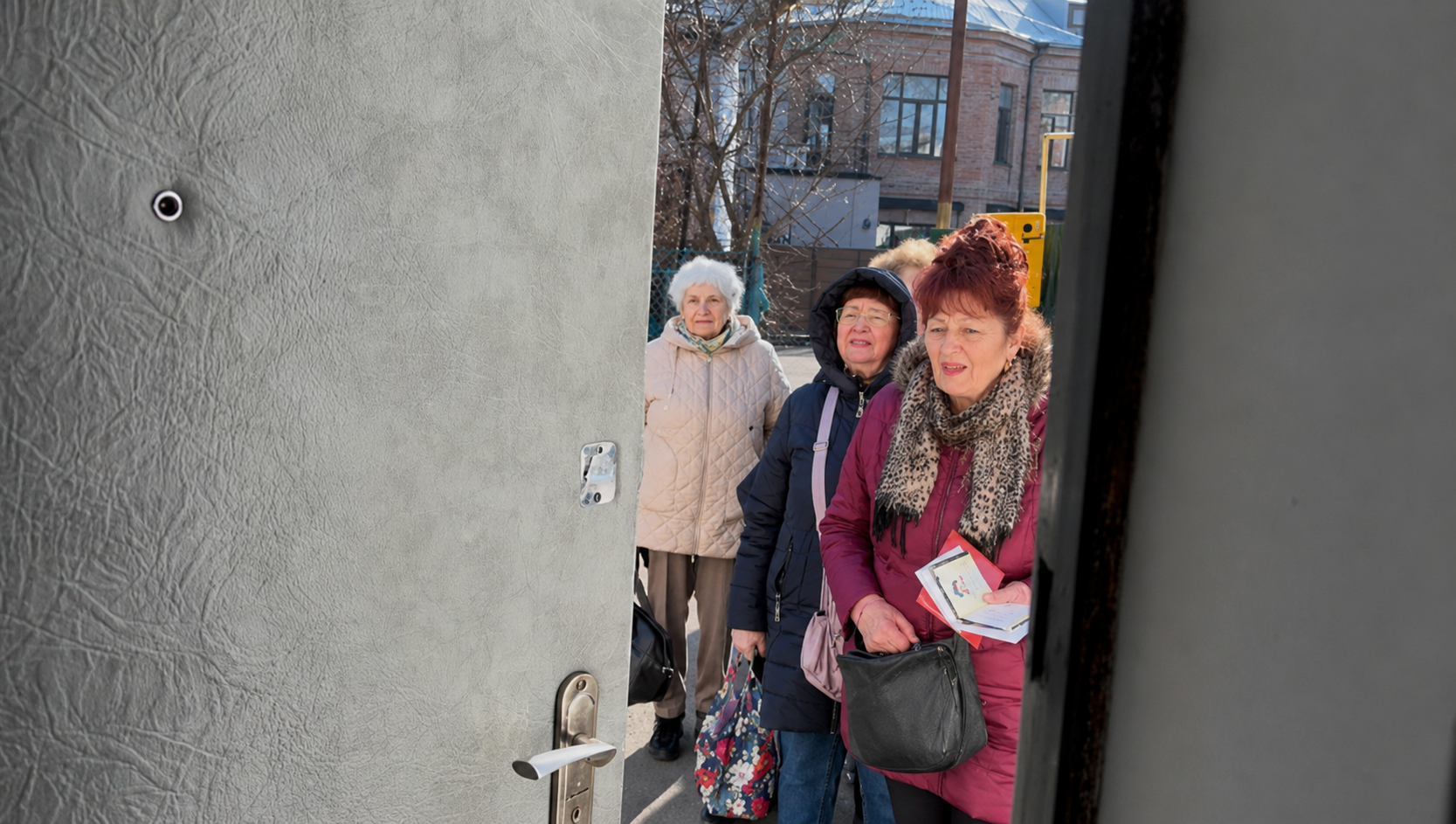
Years into the war, daily life for families across Ukraine is shaped by hardship, disruption, and the strain of uncertainty. Millions have been displaced, including approximately 3.7 million people displaced within Ukraine and a further 5.9 million forced to seek refuge in neighboring countries. Homes have been damaged or destroyed, and civilians continue to be injured by attacks. Families live with the ongoing impact of repeated exposure to air strikes and violence. Household savings have run out, employment remains unstable, and rising costs for food, rent, and utilities continue to erode purchasing power. Children, older adults, and people living with disabilities are among those most affected, often with limited capacity to recover under sustained pressure.
Families continue to adapt to repeated disruption in daily routines. Schooling is interrupted, sleep is inconsistent, and household stability is difficult to maintain over time. Millions of children have experienced ongoing trauma and disruption to their education, while access to consistent support services, including safe spaces and psychological care, remains limited in many communities.
In response, The Salvation Army World Service Office (SAWSO) continues to support the delivery of community-based assistance through eight locations across Ukraine. While many organizations have scaled back operations, local teams have remained in place, maintaining a continuous presence for families navigating prolonged crisis conditions.
Through these programs, The Salvation Army provides targeted support for households directly affected by conflict, including those displaced or impacted by active fighting. Current services focus on addressing sustained, everyday pressures families face:
- Food voucher assistance delivered monthly across seven locations, supporting households directly affected by the conflict, including those displaced or impacted by active fighting
- After-school programs providing daily meals, educational support, and access to professional psychological care for children
- Ongoing support for local staff and volunteers working under prolonged operational pressure
This work reflects a distinctly people-centered approach, focused on dignity and the time required to understand individual circumstances and respond accordingly. In many locations, support extends to those with the least mobility and fewest alternatives, including older adults living alone, people with disabilities, and households facing long-term displacement.
The population surveyed is highly vulnerable: 90% reported displacement, 56% reported a household member with functional difficulty or disability, 52% had children in the household, and 38% of respondents were over the age of 60.
Data collected through Salvation Army programs in Ukraine, drawing from more than 3,500 survey responses, indicates sustained and significant need among households receiving assistance. Ninety percent of households are living below the poverty line, and 94 percent report that they are unable to meet basic household needs. Nearly half of all respondents report skipping meals to make ends meet, reflecting limited capacity for recovery under prolonged crisis conditions.
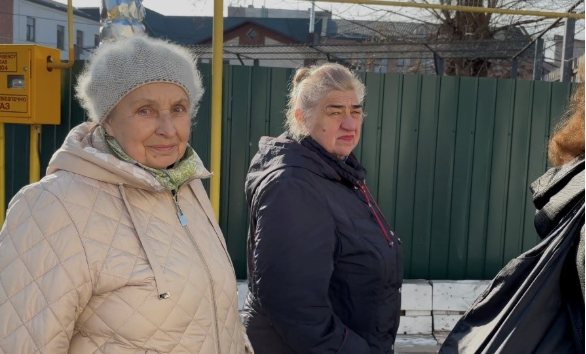
Natalia
Escape, loss, and starting again.
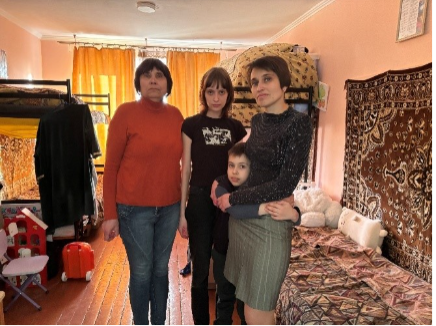
Vlad
Healing after fleeing Kharkiv.
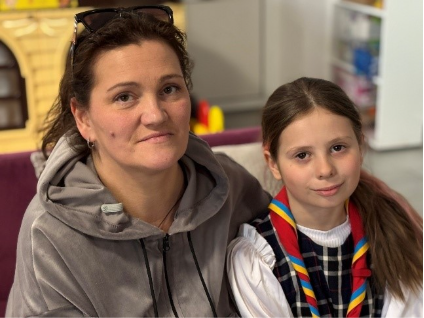
Arina
Overcoming childhood trauma.
Across Ukraine, Salvation Army food voucher programs are delivered monthly through seven locations, reflecting sustained, and growing, need over time. Recent program data shows:
- 90% of people receiving the vouchers live below the poverty line
- 94% report they are unable to meet basic household needs such as buying food and medicines
- 49% of people receiving the vouchers report skipping meals to make ends meet
These figures reflect conditions in which food assistance is an essential part of daily survival - the difference between eating and not eating.
Many recipients are older adults or individuals living with disabilities, with limited ability to increase income or recover economically. Fixed pensions, rising food costs, and ongoing displacement have steadily reduced purchasing power, leaving households with few viable alternatives.
For those who have relocated, finding stable work remains difficult. Employment options are limited, and income is often insufficient to meet rising costs. For others, prolonged exposure to stress, displacement, or injury has affected their ability to work at all.
In this context, food vouchers allow households to make limited resources stretch further. Vouchers are redeemed through local shops, allowing recipients to choose food and basic goods that meet dietary and health needs while supporting local markets. For many, this flexibility is critical in balancing food with essential costs such as rent, utilities, and medication.
As humanitarian funding has declined and other programs have narrowed, demand for food assistance has continued to increase. The Salvation Army's ongoing presence has required maintaining regular distributions while responding to growing need among those with the fewest alternatives.
A significant proportion of displaced households include children experiencing ongoing disruption to learning, alongside persistent signs of psychological stress. Program staff report patterns including behavioral withdrawal, difficulty concentrating, and declining academic performance - conditions that require consistent, professional support over time.
Access to mental health care remains limited. Families consistently report that private psychological services are unaffordable, particularly as household budgets are increasingly absorbed by essential costs. For Ukrainian families, the services provided through The Salvation Army's after-school programs are one of the only places where psychological care is accessible.
Across Ukraine, children are growing up under conditions of sustained instability.
Displacement, interrupted education, economic pressure, and repeated exposure to insecurity have contributed to persistent stress responses that do not resolve without structured, professional support. Program staff consistently report patterns including behavioral withdrawal, difficulty concentrating, and declining academic performance. These are ongoing conditions that do not resolve on their own over time and require sustained, professional intervention rather than short-term or informal support.
Access to free mental health care for children remains limited across Ukraine. Families consistently report that private psychological services are unaffordable, particularly as household budgets are increasingly absorbed by food, rent, and utilities. For families already unable to meet basic household needs, this type of support would otherwise remain out of reach. In many communities, Salvation Army afterschool programs are among the only accessible sources of professional psychological support for children.
Afterschool programs are delivered through corps facilities and are designed to integrate educational, material, and psychosocial components rather than treating mental health needs in isolation. Core elements include:
- A hot daily meal
- Structured routines and group activities
- Homework and learning support with professional teachers
- Ongoing access to trained psychologists
This integrated approach reflects field experience indicating that psychological support is most effective when delivered alongside stability in daily structure and basic material support. It also reflects the importance of supporting children as families and communities look toward longer-term recovery.
Read more about The Salvation Army's after-school program and psychological support services
At the same time, food assistance has become a central part of daily survival for many households. As income options diminish and prices rise, food vouchers are no longer supplemental but essential. Delivered monthly and redeemable through local shops, they allow families to prioritize basic nutrition while managing other fixed costs such as rent, utilities, and medication.
As humanitarian funding has declined and other programs have narrowed, demand for support continues to increase. The Salvation Army's sustained presence has required adapting to changing conditions while maintaining consistent service delivery to those most in need.
Read more about how Salvation Army scouts deliver food and support to isolated households in Ukraine
The stories that follow offer a closer look at what this prolonged crisis means for individuals and communities. They reflect everyday realities rather than extraordinary moments: families stretching food vouchers, children learning to process trauma, and local staff carrying on their work amid ongoing disruption.
Together, they show how consistent, community-based support, provided by The Salvation Army, continues to provide stability for families, children, and older adults who are navigating prolonged uncertainty with limited alternatives. Humanitarian need in Ukraine for some time now is no longer about emergency response. It's about sustaining daily life in the face of overwhelming odds.
Vlad's Story
Vlad is nine. Before his family fled Kharkiv, he spent long periods living, sleeping, and completing schoolwork in bomb shelters as air raid sirens and repeated attacks made it unsafe to remain at home. Daily routines were shaped by alerts and the need to move quickly underground, with lessons and homework often continuing in the shelter.
After a rocket strike blew away the wall of their apartment, destroying what remained inside, Vlad fled Kharkiv with his mother, sister, and grandmother to Vinnytsia. The family moved into a small single room with two bunk beds and a bathroom shared by all the apartments on the same floor. While displacement ended some of the immediate danger, it did not restore the stable environment Vlad needed.
"He was scared. He was freaking out from loud noises, everything," his grandmother said. "He was afraid to take a shower with the door closed; he had to keep the door open."
Through The Salvation Army's afterschool program in Vinnytsia, Vlad now spends part of each day in a structured setting outside the shelter. He receives meals, support with schoolwork, and takes part in dancing and singing activities alongside other children who have lived through similar disruption. He also has access to group-based psychological care delivered by trained psychologists, providing daily support within a consistent environment.
Close"He is very friendly and sociable. But now he really flourishes here," she said. "The program made a huge difference for him."
Arina's Story
In July 2022, a missile strike hit a shopping center close to an apartment building in Vinnytsia, killing around 60 people in the middle of the afternoon. Viktoriia and her daughter, Arina, were at home at the time. Viktoriia believes that if the windows in their apartment had not been open, they may not have survived the blast.
In the weeks that followed the attack, Arina, who was seven at the time, withdrew and stopped speaking almost entirely. Viktoriia recognized that what her daughter was experiencing went beyond fear or shock, but she did not have access to professional psychological support. Believing that distance from the conflict might help, she sent Arina to stay with relatives outside the country. The move did not bring improvement. Separation from her mother and familiar surroundings deepened Arina's withdrawal. After learning of The Salvation Army's afterschool program and access to free psychological services she could not otherwise afford, Viktoriia brought her daughter back to Ukraine.
Through the afterschool program, Arina receives meals, structured activities, homework support, and group-based psychological care from trained psychologists. Delivered through local Salvation Army programs supported by SAWSO, the program operates five days a week, providing consistent daily support alongside other children with similar experiences, supporting her reengagement with learning and routine interaction.
Over time, Arina began speaking again. She returned to her studies, reconnected with other children, and gradually regained a sense of routine and engagement.
"She developed. She flourished. She got friends," her mother, Viktoriia, said. "The after-school program made a huge difference."
A Salvation Army psychologist in Vinnytsia observed similar changes. "After working with her individually and as part of the group, she became more sociable. Now when I ask her, 'How are you?' she says, 'I'm pretty. I love myself.'"
Arina is not unique. Across Ukraine, children are growing up under conditions of sustained instability. Displacement, interrupted education, economic pressure, and repeated exposure to insecurity have contributed to persistent stress responses that do not resolve without structured, professional support. Program staff consistently report patterns including behavioral withdrawal, difficulty concentrating, and declining academic performance. These are ongoing conditions that do not resolve on their own over time and require sustained, professional intervention rather than short-term or informal support.
Access to free mental health care for children remains limited across Ukraine. Families consistently report that private psychological services are unaffordable, particularly as household budgets are increasingly absorbed by food, rent, and utilities. For families already unable to meet basic household needs, this type of support would otherwise remain out of reach. In many communities, Salvation Army afterschool programs are among the only accessible sources of professional psychological support for children.
Afterschool programs are delivered through corps facilities and are designed to integrate educational, material, and psychosocial components rather than treating mental health needs in isolation. Core elements include:
- A hot daily meal
- Structured routines and group activities
- Homework and learning support with professional teachers
- Ongoing access to trained psychologists
This integrated approach reflects field experience indicating that psychological support is most effective when delivered alongside stability in daily structure and basic material support. It also reflects the importance of supporting children as families and communities look toward longer-term recovery.
CloseTimo's Story
Timo was ten years old when his family fled their village near the Russian border. In the months leading up to their escape, daily life had become dominated by repeated air raid alerts and prolonged periods spent in bomb shelters as the war intensified. They evacuated by train, taking only what they could carry.
Now, four years later, Timo still struggles with school. Interrupted education, trauma and displacement have affected his ability to concentrate and complete homework, and his academic performance has declined. As he adjusted to a new environment and school system, these challenges continued to shape his learning.
After arriving in Vinnytsia, his mother, Tetiana, learned of The Salvation Army's afterschool program, supported by SAWSO, and enrolled Timo.
A central component of the program is structured homework support delivered by trained teachers, recognizing that academic functioning is often one of the earliest areas affected when children are living with prolonged stress. This support is delivered alongside embedded psychological services, allowing academic assistance and mental health care to reinforce one another.
Through the program, Timo now receives regular help with schoolwork in a structured setting and has access to group-based psychological care from trained professionals.
"I got better grades because of this in school," Timo said. "Before this … I was responsible for doing my homework on my own, so I didn't do it. I like it," he said. "We can play … we can talk to our friends."
For Tetiana, the impact extends beyond academics.
"It was difficult to find friends. He stayed at home in his room," she said. "I'm so happy that we found The Salvation Army … it makes a huge difference."
The family now lives in a single room in Vinnytsia, in a shared apartment block for medical students. The space is shared by Timo, his twelve-year-old sister, and their mother, and serves as a living area, bedroom, and place for preparing food. The family relies on food vouchers to cover basic staples. Timo completes his homework on a bunk bed — a bucket of potatoes on the floor next to him. He looks forward to the after-school program as a way to focus, keep up with his schoolwork, and spend time with other children in a more stable setting.
CloseNatalia's Story: Escape, Loss, and Starting Again
Natalia Kharchenko, 70, fled Mariupol in March 2022 as the city came under sustained air strikes and bombardment.
"Mariupol was the worst place to be," she says. "We were running."
Her family left in a single car, traveling with children and grandchildren through areas of active conflict. Communication had collapsed, and for much of the journey, they did not know where they would be able to stop or find safety.
"We didn't know where to go," she says. "We were leaving into nowhere."
They eventually reached Vinnytsia, where they now live in a small, rented apartment. The cost of living has increased significantly since their arrival. Today, Natalia and her husband rely on two pensions - one covering rent, the other used for food, medicine, and basic needs.
Support provided through SAWSO-funded Salvation Army programs has become part of how they manage daily life.
"It's a money voucher for food," she says. "It will be easier for our budget."
Without that support, she explains, purchases would be reduced further.
"We would save and count every penny. We would buy less food and life would be more difficult for us."
Meals are prepared at home using basic ingredients.
"My husband is a good cook," she says. "We cook borscht, kapusniak, dumplings. We don't go out. We can't afford it."
The pressure of displacement remains central to how she describes her life.
"Could you imagine living in one place, building a house, raising a family, and you lost everything?" she asks. "You are basically homeless."
Her children have since moved on. Her son is serving in the army. Her daughter is working in Dnipro. Natalia and her husband remain in Vinnytsia, maintaining a limited routine shaped by cost, access, and necessity.
At the same time, she is clear about what remains.
"I am very lucky that my family is alive," she says.
Close"Mariupol is in the past," she says. "There are graves and ruins. I want just peace."
Iryna's Story: Supporting a Child with Autism as a Refugee
Iryna fled to Chișinău, Moldova, with her three children and elderly grandmother when the war began. Her three-year-old son has autism and is highly sensitive to noise. As shelling intensified in Kherson, the sounds of explosions made it increasingly difficult for him to cope, and the environment became impossible to manage. He is also able to eat only a limited range of specific foods, many of which were no longer available near the front lines.
While the family could find the food he needed in Moldova, those foods became more difficult to afford. Rent and household costs increased, leaving less available for groceries. Meeting her son's needs became one of the most difficult parts of managing daily life.
Through food vouchers provided through SAWSO-funded Salvation Army programs in Moldova, Iryna now has help buying the foods her son can eat, alongside basic groceries for the rest of the family.
Without that support, she would have to make difficult choices about what to buy. Food would be reduced further, and meals would become less consistent.
As other voucher programs have reduced eligibility and monthly allowances, this type of assistance has become increasingly important for households managing both displacement and specific health or dietary needs.
For Iryna, the decision to leave Ukraine was necessary to meet her children's needs. But her attention remains fixed on Kherson, where her parents continue to live under the same conditions she left behind. She tears up as she recounts how they were targeted by a drone that ploughed through the windshield of their car while driving home from work a few months ago. Both were seriously injured and left permanently disabled. Despite this, they have chosen to stay in the city they have lived all their lives.
Iryna's situation reflects a broader pattern seen across the region, where rising costs and declining support options have separated families and left many of those displaced with few alternatives for meeting basic needs.
In countries neighboring Ukraine, including Romania, Moldova, Bulgaria, and Georgia, Salvation Army voucher programs operate in contexts where displacement, rising costs, and declining alternatives overlap. In Bulgaria and Georgia, the Salvation Army, through SAWSO, operates one of the only food voucher programs available, reaching more people than originally planned.
As humanitarian funding has declined, food voucher programs operate under tighter eligibility criteria. Demand consistently exceeds available resources, requiring careful prioritization. For many households, however, vouchers remain one of the few forms of assistance that can respond to sustained need rather than short-term crisis.
CloseSalvation Army Scouting Stories: Delivering Food and Connection to Isolated Households
What these distributions cannot show in photographs is the full extent of the living conditions facing some recipients. During door to door food delivery, staff encounter older adults who have been displaced for four years and now live in deteriorating buildings, some without reliable power, some unable to leave their apartments at all. For individuals with limited mobility, vouchers paired with delivery are sometimes the only way food reaches them.
In these settings, food assistance is not only about nutrition. The act of delivery and presence carries meaning for people who have been displaced for years and feel increasingly unseen. For many recipients, the visit confirms that they have not been forgotten.
Four years into the war, food vouchers remain a practical response to sustained economic pressure, reduced coping capacity, and prolonged displacement. They reflect conditions on the ground: high costs, limited income, and few alternatives. For older adults and displaced families alike, vouchers continue to provide a measure of stability in a context where recovery remains uncertain.
The stories that follow offer a closer look at what this prolonged crisis means at the household level. They reflect everyday realities rather than extraordinary moments, focusing on three individuals and families whose lives have been shaped by long-term displacement, declining health, and limited mobility.
1. Svitlana: Relying on Food Deliveries to Survive
Svitlana Lyhrulbina, 79, lives alone in a small, heavily cluttered house in Vinnytsia, managing multiple health conditions, including diabetes and the need for regular medication throughout the day.
Before the war, she trained and worked as an engineer. Today, she lives on a pension of 4,100 hryvnias, approximately $100 per month, which she finds inadequate to meet basic needs. Most of her income is spent on medication and utilities, leaving little for food.
"I have a pension like a beggar," she says. "It goes into medicine and utilities."
Her daily routine is structured around her health. Medication must be taken frequently, often every one to two hours, and requires that she eat beforehand. Preparing food within this schedule is difficult.
"I need to take medicine every hour, every two hours," she explains. "Before I take medicine, I need to eat something. I don't have time to cook. I have to take care of myself."
Food deliveries from Salvation Army scouts have become a necessary part of managing that routine. Without them, securing food alongside medication and basic care would be significantly more difficult.
"When young people come, they bring food," she says. "It's easier."
The visits also provide her only consistent contact with others. Svitlana rarely leaves her apartment and spends most of her time alone.
"When somebody comes, I communicate with people," she says. "I don't walk out of the house."
"They bring something to eat," she says. "They give me some hope."
"I am really grateful for help."
2. Iurii: Living with Limited Mobility and Ongoing Medical Need
Since his accident, Iurii Martseniuk, 54, has been unable to navigate the four flights of stairs to his apartment in Vinnytsia, leaving him effectively trapped in his home.
He recently broke his hip and requires surgery, which he estimates will cost 700,000 hryvnias (approximately $18,000 USD). Without access to that level of funding, he has adapted as best he can, teaching himself to walk slowly with assistance.
"I taught myself how to walk with a broken hip bone," he says. "Little by little."
Daily tasks remain difficult. Even before his injury, leaving the apartment required navigating four flights of stairs. Now, with limited mobility, routine activities such as accessing food or water have become time-consuming and physically demanding.
When he does attempt to leave, he walks to a nearby grocery store using canes, a journey that can take up to two hours. Much of the time, he remains inside his apartment.
Food deliveries from Salvation Army scouts have become a consistent source of support, reducing the need for these trips and providing food and water directly to his home.
"Salvation Army people come to me almost every day," he says. "It's a big difference. Much better."
He relies on what is brought.
"I eat what they bring to me. I'm not picky."
"My hope is on God and on good people," he says.
3. Liudmyla: Coping with Severe Disability and Limited Living Conditions
Liudmyla Oleksiienkova and her husband, Yurii Oleksiienkov, were displaced from Kharkiv in 2022 as the war intensified, leaving their home and relocating under difficult conditions while managing his severe disability. Yurii is paralyzed from the neck down, and Liudmyla has been his full-time caregiver throughout their displacement. The move required leaving behind their previous life and adapting to a new environment with limited mobility, reduced resources, and no certainty about long-term stability.
Before the war, they describe themselves as having been stable, with housing, financial security, and standing in their community.
"We were well-off people," they explain. "With apartments, with cars, with respect."
That stability has been lost. Today, they live in rented accommodation, supported by two pensions. One covers rent, while the other is used for food, medicine, and basic needs, leaving limited flexibility in their daily budget. At the time of recent Salvation Army visits, the apartment was without power, and conditions in the building, already cold and damp, were further affected by the lack of electricity.
Yurii's condition requires constant care. He is paralyzed from the neck down and also experiences dementia, and Liudmyla manages his daily needs within the constraints of their current living conditions.
"We suffered a lot," she says.
Since their displacement, they have relied on continuous support from The Salvation Army, beginning in 2022. Assistance has included clothing, food, and regular contact from local staff and volunteers, providing consistency over a prolonged period of instability.
"They helped us since 2022," she says. "They always ask us, 'Do you need something?'"
Food deliveries from Salvation Army scouts remain a necessary part of that support. For a household managing both displacement and full-time care, leaving the apartment to secure food is often not possible. Deliveries reduce that burden and allow Liudmyla to focus on caregiving.
On one occasion, when she was unable to gather the ingredients needed to prepare a meal, a Salvation Army worker brought what she needed directly to her home.
"I wanted to cook borscht," she recalls. "She brought me a food package so I could cook it."
"Can you imagine losing everything?" she asks. "But we are lucky," she says. "We are alive."
"Peace," she says. "I need peace."
Close